Unmasking the Ghost in the Machine: Hacking Connected Vehicles & Why You Should Care
Explore automotive cybersecurity vulnerabilities like CAN bus hacks & OTA risks. Learn about ISO 21434 and how to secure connected vehicles.
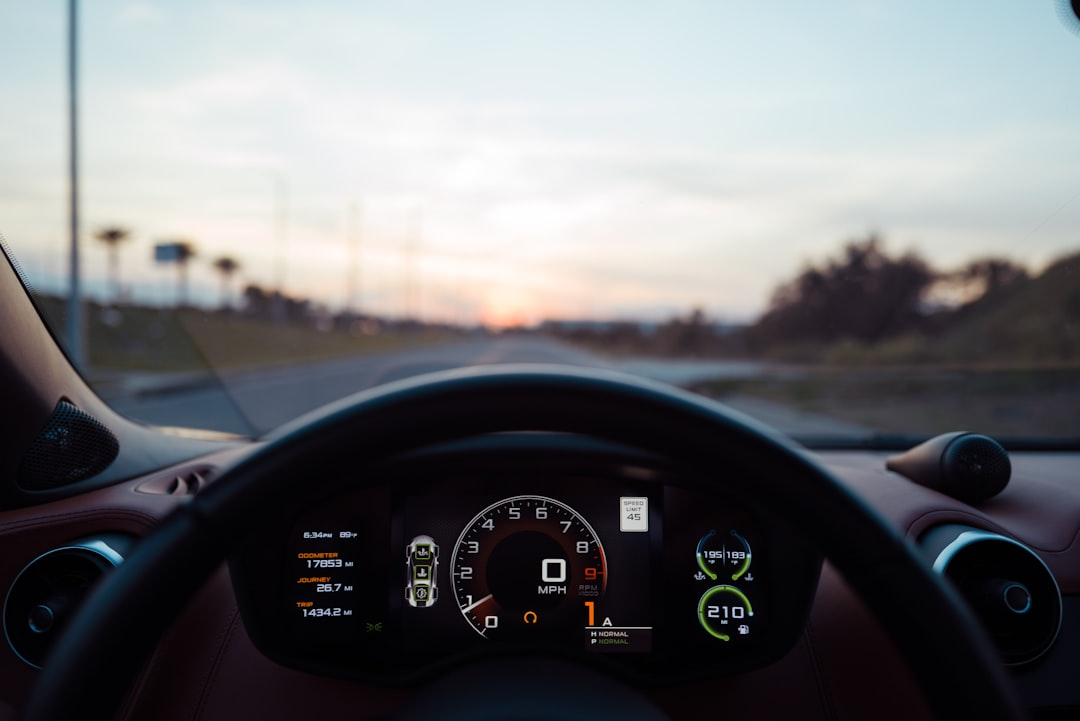
Imagine cruising down the highway, music blasting, GPS guiding you, when suddenly, your steering locks, brakes fail, or the engine dies. While it sounds like a scene from a sci-fi thriller, for our increasingly connected vehicles, it’s a terrifyingly real possibility. In this deep dive, we’ll unmask the digital vulnerabilities that hackers exploit in modern cars, from the foundational CAN bus to the risks of Over-the-Air (OTA) updates, and explore how standards like ISO 21434 are striving to keep us safe.
Introduction: The Road Ahead is Digital 🛣️
The automotive industry is in the midst of a technological revolution. Vehicles are no longer just mechanical beasts; they are complex, networked computers on wheels, brimming with sensors, infotainment systems, and internet connectivity. This transformation brings incredible convenience, safety features, and efficiency – but it also ushers in a new era of cybersecurity challenges. With every line of code, every network connection, a potential vulnerability emerges, turning our beloved cars into tempting targets for cybercriminals and even nation-state actors. Are our cars ready for the digital assault? Let’s find out.
The CAN Bus: Vehicle’s Nervous System Under Siege 💥
At the heart of every modern vehicle’s internal communication lies the Controller Area Network (CAN) bus. Developed in the 1980s, the CAN bus is a robust, inexpensive standard designed to allow microcontrollers and devices to communicate with each other in applications without a host computer. Think of it as your car’s central nervous system, carrying critical commands and data between components like the engine control unit (ECU), braking system, airbags, and infotainment.
However, the CAN bus was never designed with security in mind. It operates on a broadcast principle, meaning all messages are visible to all connected ECUs. Critically, there’s no inherent authentication, encryption, or message integrity checks. This means that if an attacker gains access to the CAN bus – whether physically through the OBD-II port or remotely via a vulnerable connected component – they can potentially inject malicious messages, spoof legitimate ones, or even disable critical systems.
Critical Warning: CAN bus vulnerabilities are often the gateway for deeper vehicle exploits. The lack of built-in security makes it a prime target once initial access is achieved.
A chilling real-world example is the 2015 Jeep Cherokee hack by security researchers Charlie Miller and Chris Valasek. They remotely exploited a vulnerability in the Uconnect infotainment system, gained access to the vehicle’s internal network, and subsequently sent malicious commands over the CAN bus to control the car’s steering, brakes, and transmission – all while a journalist was driving it on the highway. This incident led to a massive recall of 1.4 million vehicles and fundamentally shifted the automotive industry’s perspective on cybersecurity. While newer CAN-FD (Flexible Data-Rate) and Automotive Ethernet standards address some bandwidth limitations, the underlying security paradigms are still evolving.
1
2
3
4
5
6
7
8
9
10
11
12
13
14
15
16
17
18
19
20
21
22
23
24
25
26
27
28
# Illustrative Python-like pseudocode for a malicious CAN injection
# This is a simplified example and requires specific hardware interfaces (e.g., CAN adapter)

import can_adapter # Assume this library exists for CAN communication

def send_malicious_can_message(arbitration_id, data_bytes):
    """
    Sends a forged CAN message. In a real scenario, 'data_bytes' would
    be crafted to trigger a specific dangerous action (e.g., disable brakes).
    """
    try:
        bus = can_adapter.open_bus(channel='can0', bustype='socketcan')
        message = can_adapter.Message(
            arbitration_id=arbitration_id,
            data=data_bytes,
            is_extended_id=False
        )
        bus.send(message)
        print(f"Malicious CAN message sent: ID={hex(arbitration_id)}, Data={data_bytes.hex()}")
    except Exception as e:
        print(f"Error sending CAN message: {e}")
    finally:
        if 'bus' in locals() and bus:
            bus.shutdown()

# Example: Hypothetical command to disable brakes (arbitration ID and data are illustrative!)
# DO NOT ATTEMPT WITHOUT PROPER AUTHORIZATION AND CONTROLLED ENVIRONMENT
# send_malicious_can_message(0x123, bytearray([0x00, 0x01, 0x02, 0x03, 0x04, 0x05, 0x06, 0x07]))
OTA Updates: A Double-Edged Sword ⚔️
Over-the-Air (OTA) updates have become a cornerstone of modern vehicle maintenance and feature deployment. Just like your smartphone or laptop, connected cars can receive software updates wirelessly, enabling manufacturers to fix bugs, enhance performance, deploy new features, and even address critical security vulnerabilities post-sale. This capability is a game-changer, promising increased vehicle longevity and constant improvement.
However, OTA updates introduce a significant attack surface if not implemented with robust security. A compromised OTA update mechanism could allow attackers to push malicious firmware to thousands or even millions of vehicles simultaneously. Imagine an update package that, instead of improving your car, installs ransomware, creates a backdoor, or bricks the vehicle entirely.
Security Warning: Always ensure your vehicle’s OTA updates come from verified, trusted sources. Be wary of any unusual update prompts or third-party modifications.
Risks associated with OTA updates include:
- Supply Chain Attacks: Malicious code injected into the update development pipeline or distribution infrastructure.
- Integrity Issues: Lack of proper cryptographic signing or verification could allow attackers to tamper with update packages.
- Replay Attacks: Exploiting vulnerabilities in the update process to re-install older, vulnerable firmware.
- Compromised Update Servers: If the manufacturer’s update servers are breached, attackers could distribute malicious updates.
Security researchers continually probe these systems. Reports from Upstream Security in 2024 highlight a dramatic increase in incidents related to OTA vulnerabilities, emphasizing the critical need for secure update protocols, strong authentication, and rigorous integrity checks throughout the entire OTA ecosystem.
| Feature | Benefits | Risks |
|---|---|---|
| OTA Updates | Bug fixes, feature enhancements, recalls | Malicious firmware, supply chain compromise |
| Remote Diagnostics | Proactive maintenance, reduced downtime | Unauthorized data access, vehicle manipulation |
| V2X Communication | Traffic optimization, collision avoidance | Eavesdropping, denial-of-service, spoofing |
ISO 21434: Steering Towards Security Compliance 🔐
With the escalating threat landscape, the automotive industry recognized the urgent need for a standardized approach to cybersecurity. Enter ISO/SAE 21434: Road Vehicles – Cybersecurity Engineering, published in 2021. This international standard provides a framework for managing cybersecurity risks throughout the entire lifecycle of road vehicles, from initial concept and design to development, production, operation, maintenance, and decommissioning.
ISO 21434 is not just a guideline; it’s becoming a de facto requirement for automotive manufacturers and suppliers. It emphasizes a “security by design” approach, ensuring cybersecurity considerations are integrated from the very beginning of the product development process, rather than being an afterthought.
Further Information: ISO 21434 is closely tied to UNECE WP.29 Regulation No. 155 (R155), which mandates that vehicle manufacturers implement a certified Cybersecurity Management System (CSMS) for vehicle type approval in many global markets, including the EU, UK, Japan, and South Korea. This regulation has been in effect since 2021 for new vehicle types and since July 2024 for all new vehicles produced.
Key aspects covered by ISO 21434 include:
- Cybersecurity Management: Establishing an organizational cybersecurity culture and processes.
- Threat Analysis and Risk Assessment (TARA): A systematic approach to identify, evaluate, and mitigate cybersecurity risks specific to vehicle components and systems.
- Cybersecurity Specifications: Defining security requirements for hardware and software.
- Verification and Validation: Rigorous testing to ensure security measures are effective.
- Continuous Monitoring & Incident Response: Managing cybersecurity risks post-production and responding to incidents.
Compliance with ISO 21434 is no longer optional for companies aiming to sell vehicles globally. It’s a testament to the industry’s commitment to building more resilient and secure connected vehicles, safeguarding both consumer trust and public safety. You can find more details on the ISO website.
The Evolving Threat Landscape & Defense Strategies 🛡️
The challenge for automotive cybersecurity is a moving target. As vehicles become even more interconnected with their environment (V2X - Vehicle-to-Everything), smart city infrastructure, and even the power grid through charging stations, new attack vectors emerge. Infotainment systems, mobile companion apps, and even shared vehicle data platforms are increasingly becoming targets.
Cybersecurity incidents in the automotive sector continue to trend upwards. A recent analysis by Stellantis and Trend Micro in 2024 highlights a sustained increase in attack attempts, targeting diverse areas from backend servers to in-vehicle ECUs. Protecting these complex systems requires a multi-layered, proactive defense strategy:
- Secure by Design: Integrating security into every stage of vehicle development, as championed by ISO 21434.
- Hardware Security Modules (HSMs): Dedicated hardware components to protect cryptographic keys and perform secure boot processes.
- Intrusion Detection Systems (IDS): In-vehicle systems that monitor network traffic and system behavior for anomalies and potential attacks.
- Secure Boot and Firmware Over-the-Air (FOTA) Updates: Ensuring only authenticated and verified software runs on ECUs and that updates are delivered securely.
- Segmentation & Isolation: Dividing vehicle networks into isolated zones to contain potential breaches.
- Penetration Testing & Bug Bounty Programs: Continuously testing vehicle systems for vulnerabilities and incentivizing ethical hackers to find flaws.
- Supply Chain Security: Extending cybersecurity requirements to all suppliers of components and software.
Pro Tip for Consumers: Keep your vehicle’s software updated, be cautious about aftermarket modifications, and never connect to untrusted Wi-Fi networks in your car if it accesses sensitive systems. Just like your phone, your car needs your vigilance too!
Key Takeaways 💡
- CAN Bus is Vulnerable: The Controller Area Network (CAN) bus lacks inherent security features, making it a primary target for attackers once they gain network access.
- OTA Updates are Critical, But Risky: While convenient and essential for modern cars, Over-the-Air updates introduce significant supply chain and integrity risks if not rigorously secured.
- ISO 21434 is the New Standard: This international standard provides a crucial framework for integrating cybersecurity engineering throughout the entire vehicle lifecycle, aligning with global regulations like UNECE WP.29 R155.
- Proactive Defense is Paramount: A multi-layered security approach, including secure-by-design principles, intrusion detection, and continuous testing, is vital to protect against evolving threats.
- Your Car is a Computer: Treat your vehicle with the same cybersecurity hygiene you apply to your other smart devices – regular updates, awareness, and caution.
Conclusion: Driving Towards a Secure Future 🚀
The convergence of automotive engineering and advanced cybersecurity is no longer a luxury, but a necessity. As vehicles become extensions of our digital lives, the imperative to secure them intensifies. Manufacturers, suppliers, and even consumers all play a role in building a resilient automotive ecosystem. By understanding vulnerabilities like the CAN bus, managing OTA update risks, and embracing standards like ISO 21434, we can collectively steer towards a future where connected vehicles are not just smart and efficient, but also inherently safe and secure. The road ahead is undoubtedly complex, but with robust cybersecurity at the wheel, it can also be a journey of unparalleled innovation and trust.
—Mr. Xploit 🛡️