The Biometric Paradox: Unmasking Spoofing Attacks on Fingerprints and Facial Recognition
Explore the escalating threat of biometric spoofing attacks on fingerprint and facial recognition systems, and discover cutting-edge defenses against deepfakes and advanced bypass techniques.
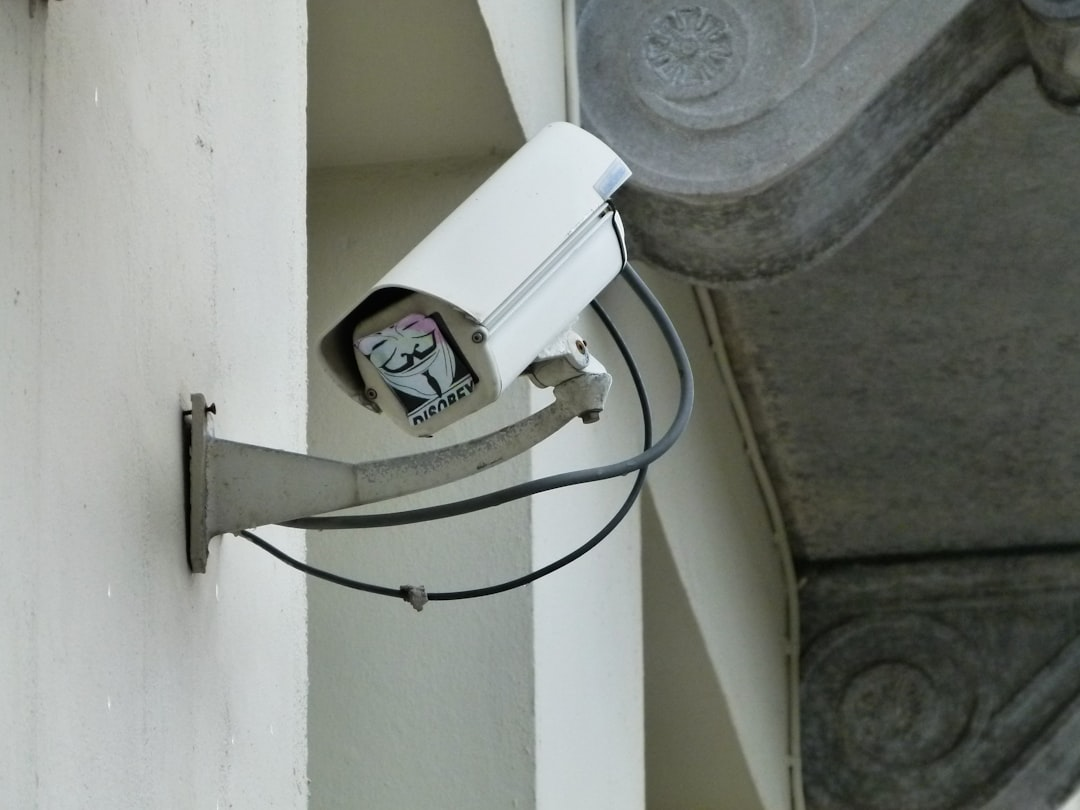
Ever tapped your finger or glanced at your phone to unlock it, marveling at the seamless convenience? 🔐 Biometric authentication has woven itself into the fabric of our digital lives, promising unparalleled ease and a heightened sense of security. But what if that trust is misplaced? What if the very convenience we cherish harbors a silent, evolving threat – one that can fool even the most advanced systems with a fake identity?
This deep dive into the world of biometric authentication isn’t just a technical exposé; it’s a critical examination of the escalating battle between convenience and security, specifically focusing on the insidious rise of spoofing attacks on fingerprint and facial recognition systems. We’ll explore the latest techniques employed by attackers, from sophisticated deepfakes to AI-generated biometric clones, and arm you with insights into how we can fortify our defenses against these cutting-edge threats.
The Allure of Biometrics and the Shadow of Spoofing
Biometric authentication, leveraging unique biological and behavioral characteristics, has revolutionized how we prove our identity. From unlocking smartphones to authorizing financial transactions, its speed and intuitive nature are undeniably appealing. Gone are the days of memorizing complex passwords, replaced by the simplicity of a touch or a glance. This perception of inherent security stems from the belief that ‘you are your password’ – a seemingly unforgeable truth.
However, this convenience comes with a critical caveat: biometrics, unlike traditional passwords, are not secrets. They are data, and like any data, they can be captured, replicated, and exploited. Spoofing attacks exploit this vulnerability by presenting a fake biometric sample – be it a fabricated fingerprint, a printed photo, or an AI-generated deepfake video – to deceive the authentication system into granting unauthorized access. The stakes are higher than ever, especially with the proliferation of high-quality image and video generation tools, making the creation of convincing fake biometrics more accessible to malicious actors.
Understanding Biometric Modalities Biometrics are broadly categorized into two types:
- Physiological Biometrics: Based on unique physical characteristics (e.g., fingerprints, facial features, iris patterns, DNA).
- Behavioral Biometrics: Based on unique patterns in behavior (e.g., gait, voice, keystroke dynamics, signature). Spoofing primarily targets physiological biometrics.
Fingerprint Spoofing: From Gelatin Molds to AI-Clones 🖐️
Fingerprint recognition, one of the earliest forms of biometric authentication, has long been a target for spoofing. Early attacks were almost comically simple: a latent print lifted from a surface, photographed, enhanced, and then replicated using materials like gelatin, silicone, or latex to create a “gummy” finger. These physical spoofs could often fool older capacitive and optical sensors.
Fast forward to today, and the game has changed dramatically. Researchers have demonstrated techniques to reconstruct fingerprints from partial prints or even smudges with remarkable accuracy using AI and advanced image processing. Imagine leaving a faint print on a glass, and an attacker can synthesize a functional replica. Furthermore, the concept of “master prints” – statistically generated synthetic fingerprints that match a surprisingly high percentage of real fingerprints – highlights a fundamental vulnerability. A 2023 study showed how AI could generate partial master prints capable of bypassing various systems.
Your Fingerprints Aren’t Secret! Unlike a password you can change, your fingerprints are permanently public. Every item you touch leaves a trace. Once compromised, a biometric trait cannot be “reset,” making effective liveness detection and multi-factor authentication paramount.
Consider the practical scenario: A high-profile individual’s fingerprint is inadvertently captured from a public photo of their hand on a touchscreen, or even from a discarded coffee cup. With 3D printing and sophisticated material science, a nearly perfect replica can be manufactured. Coupled with social engineering, this could grant access to their devices or accounts. The rise of AI-powered generation tools means creating these replicas is becoming less about manual dexterity and more about computational power and readily available data.
Facial Recognition Spoofing: The Deepfake Frontier 🎭
Facial recognition has become ubiquitous, from unlocking your phone to border control. Its convenience is undeniable, but it’s also where some of the most advanced and chilling spoofing attacks manifest. Initial attacks were straightforward: presenting a high-resolution photo or a video of the legitimate user to the camera. Most modern systems quickly learned to detect these static images or simple video loops.
However, the advent of deepfakes has escalated the threat exponentially. Powered by Generative Adversarial Networks (GANs) and advanced AI, deepfakes can create hyper-realistic videos or even real-time video streams of a person saying or doing anything the attacker desires. This means an attacker could present a live deepfake video feed, complete with blinking, subtle head movements, and even speech, to fool a facial recognition system that relies on basic “liveness detection” (e.g., asking the user to blink or turn their head).
“The true danger of deepfakes isn’t just visual deception; it’s the potential for identity theft at a scale and sophistication previously unimaginable, bypassing even robust liveness detection.”
A 2024 report by a major cybersecurity firm highlighted a 300% increase in deepfake-related fraud attempts targeting identity verification services. Attackers are increasingly leveraging publicly available images and videos from social media to train their deepfake models, making almost anyone a potential target.
The Deepfake Gold Rush Advanced deepfake software, once the domain of highly skilled researchers, is becoming democratized. With accessible tools and vast online data, even amateur attackers can generate convincing fake facial biometrics, posing a severe threat to online identity verification, financial services, and critical infrastructure access.
Beyond deepfakes, sophisticated physical masks crafted with intricate detail, often using 3D printing and professional makeup techniques, can also bypass some systems. These aren’t your Halloween masks; they’re designed to replicate facial geometry and skin texture with uncanny accuracy.
Beyond Basic Spoofing: Emerging Threats and Advanced Techniques
The arms race between biometric authentication and spoofing is constant. Attackers are not just improving existing methods; they’re exploring new vectors and combining techniques for multi-modal assaults.
- Synthetic Biometric Generation: Researchers are exploring AI models capable of generating entirely synthetic but plausible biometric data (fingerprints, faces, iris patterns) that don’t belong to any real person but can bypass systems not robust enough to detect algorithmic anomalies.
- Side-Channel Attacks: This involves extracting biometric data or bypassing security mechanisms by observing the system’s operation (e.g., power consumption analysis, electromagnetic emanations) rather than directly interacting with the sensor. While complex, these attacks can compromise the underlying security hardware.
- Presentation Attack Detection (PAD) Evasion: PAD (often called liveness detection) is the primary defense against spoofing. Attackers constantly seek ways to evade both active PAD (user performs an action like blinking) and passive PAD (system analyzes subtle physiological signs). Examples include specialized projectors to mimic pupil dilation or infrared emitters to spoof thermal signatures.
- Voice Cloning for MFA: While not a physical biometric, voice is increasingly used for multi-factor authentication (MFA). Advanced AI voice cloning, often using short audio clips from public sources, can bypass voice-based authentication systems, leading to account takeover.
Biometric Hygiene Matters! Be mindful of what personal information, especially photos and videos, you share online. High-quality images and video clips can be invaluable assets for attackers creating sophisticated deepfakes or 3D models of your face. Similarly, avoid leaving easily accessible fingerprints on shared devices or public surfaces.
Fortifying Our Biometric Defenses: The Path Forward 🛡️
The good news is that the industry isn’t standing still. Significant advancements are being made in developing more robust anti-spoofing mechanisms.
- Advanced Liveness Detection (PAD): This is the frontline defense.
- Passive PAD: Analyzing subtle cues like skin texture, blood flow, reflections, 3D depth, and micro-expressions without requiring user interaction. Modern AI models are becoming exceptionally good at detecting the tell-tale signs of a fake.
- Active PAD: Incorporating challenges like random head movements, blinking, or speaking specific phrases. The key is to make these challenges dynamic and difficult to pre-program or replicate with a static spoof.
- Multi-spectral imaging: Using different light wavelengths to analyze sub-surface skin features for fingerprints.
- Thermal Analysis: Detecting body heat for liveness in facial recognition.
Multi-Modal Authentication: Combining two or more biometric factors (e.g., face + voice) or a biometric factor with a traditional one (e.g., fingerprint + PIN, face + token). This significantly increases the effort required for an attacker.
Behavioral Biometrics as a Layer: Continuously monitoring user behavior (typing rhythm, mouse movements, gait patterns) can flag anomalies that might indicate a legitimate user has been compromised or a spoof is in progress, even after initial authentication.
Hardware-Based Security: Utilizing secure enclaves and Trusted Execution Environments (TEEs) on devices (like Apple’s Secure Enclave or Android’s StrongBox) to store and process biometric templates. This protects the sensitive data from being accessed or tampered with even if the main operating system is compromised.
1
2
3
4
5
6
7
8
# Conceptual example: Biometric data securely processed within a TEE
# This is not user-accessible code but illustrates the principle
biometric_sensor_data -> TEE_secure_processor
TEE_secure_processor -> match_biometric_template (inside TEE)
if match_success:
    TEE_secure_processor -> issue_authentication_token
else:
    TEE_secure_processor -> deny_access
Federated Learning and AI for Anomaly Detection: Training AI models across vast, anonymized datasets to identify new spoofing patterns and quickly adapt defenses.
- Adherence to Standards: Following guidelines from organizations like NIST (National Institute of Standards and Technology) for biometric data security and performance, and frameworks like the FIDO Alliance for secure authentication.
Key Takeaways
- Convenience vs. Security is a Constant Tug-of-War: While biometrics offer immense convenience, their inherent ‘public’ nature makes them susceptible to sophisticated spoofing.
- Spoofing is Evolving Rapidly: From simple molds to advanced AI-generated deepfakes and synthetic biometrics, attackers are leveraging cutting-edge technology.
- Liveness Detection is Paramount: Robust Presentation Attack Detection (PAD) is the primary defense against spoofing, but it must continuously evolve.
- Multi-Factor is Not Optional: Combining biometrics with other factors (PIN, token, behavioral biometrics) significantly enhances security.
- Your Digital Footprint Matters: Be mindful of sharing high-quality images and videos online, as they can be used to create highly convincing spoofs.
Conclusion
The promise of biometric authentication is undeniable: a world where our identity is effortlessly and securely confirmed. Yet, as we’ve seen, this promise is constantly challenged by the ingenuity of attackers who exploit the very data designed to protect us. The escalating sophistication of spoofing attacks, particularly with the rise of deepfakes and AI-generated biometrics, demands our unwavering attention.
It’s a continuous arms race where the latest technologies are both the weapon and the shield. For users, the message is clear: embrace the convenience, but never compromise on security. Enable multi-factor authentication, be vigilant about your digital footprint, and demand robust anti-spoofing measures from the services you use. For developers and cybersecurity professionals, the challenge is to continuously innovate, building systems that are not just convenient, but truly impervious to the ever-evolving tactics of biometric fraud. The future of digital identity hinges on our ability to strike this delicate balance.
What steps are you taking to protect your biometric data in an increasingly digital world? Share your thoughts!
—Mr. Xploit 🛡️