Deepfake Deception: How AI-Cloned Voices and Faces are Rewriting the Rules of Cyberfraud
Explore the rapidly evolving threat of deepfake technology, from voice cloning to video manipulation, and learn how to protect yourself and your organization from sophisticated AI-driven social engineering attacks.
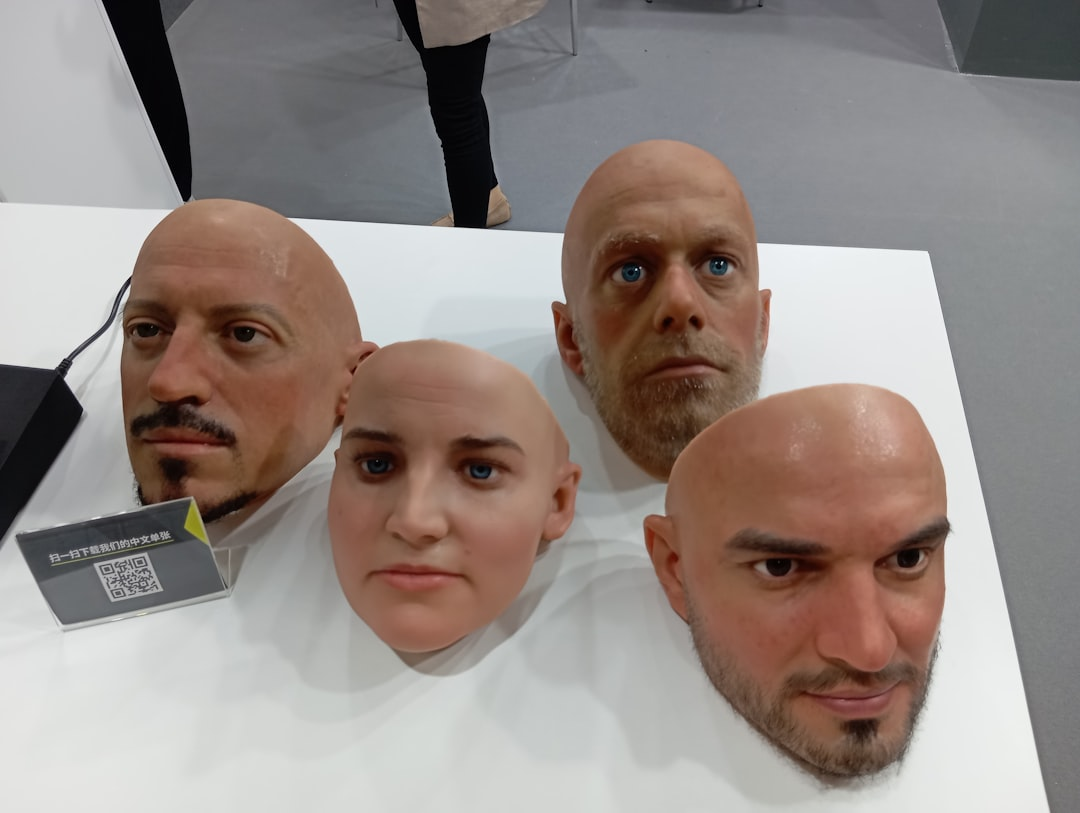
Imagine your CEO calling with an urgent, confidential request for a wire transfer, their voice perfectly authentic, their face mirroring their usual seriousness. Now, imagine it wasn’t them at all, but a sophisticated AI construct designed to drain your company’s coffers. Welcome to the terrifying new frontier of identity fraud, where deepfake technology is blurring the lines between reality and deception. 🔐
In this crucial read, we’ll dive deep into the mechanics of deepfake voice cloning and video manipulation, uncover real-world attack vectors, and equip you with the latest strategies to defend against these increasingly prevalent and potent social engineering threats. Why does this matter now? Because with the rapid advancement of generative AI, deepfakes are no longer the stuff of sci-fi; they are a clear and present danger to individuals and organizations worldwide. ⚡
The Echo Chamber of Deceit: Understanding Deepfake Technology
Deepfake technology, primarily powered by sophisticated artificial intelligence models like Generative Adversarial Networks (GANs) and more recently, diffusion models, has evolved from crude, comical swaps to incredibly convincing synthetic media. At its core, deepfake aims to create, edit, or synthesize human likenesses – voices, faces, and even full body movements – to make them appear authentic.
Voice Cloning: This involves training an AI model on a small sample of a target’s speech (sometimes as little as 3-5 seconds). The AI learns the unique timbre, pitch, cadence, and accent, then generates new speech in that voice. Imagine a scammer with access to public interviews or even brief voicemails, able to generate any sentence they desire in your target’s voice. The fidelity of these cloned voices has improved dramatically, making them almost indistinguishable from real speech, even to trained ears.
Video Manipulation: Far more complex, video deepfakes synthesize a target’s face or body onto existing video footage, or even create entirely new video from scratch. This involves mapping facial expressions, head movements, and lip sync to match a new audio track or script. Recent advancements allow for real-time deepfakes, where a person can “wear” another’s face during a live video call, delivering a script with alarming realism.
The Tech Under the Hood: Deepfakes leverage machine learning algorithms that analyze vast datasets of human speech and video. GANs, for example, involve two neural networks: a generator that creates fakes and a discriminator that tries to tell them apart. Through this adversarial training, the generator becomes incredibly adept at producing fakes that fool the discriminator, and by extension, humans. Diffusion models are also making strides, offering even higher fidelity and control.
The Social Engineering Vector: When AI Meets Human Vulnerability
Deepfakes aren’t just about misinformation; they are powerful weapons in the arsenal of social engineers. By creating a compelling illusion of identity, attackers can bypass traditional security measures and exploit the most fundamental human vulnerabilities: trust and urgency.
1. Executive Impersonation & BEC (Business Email Compromise) 📞💸 This is perhaps the most financially devastating application. Attackers use voice cloning to impersonate senior executives, finance officers, or even trusted vendors. They then call employees responsible for transfers, typically in finance departments, demanding urgent, often off-book wire transfers.
- Real-world Example (2024-2025 Trends): In a hypothetical scenario reflective of recent trends, a finance manager receives a call, ostensibly from their CEO, urging an immediate transfer of funds to an unfamiliar vendor for a “secret acquisition.” The CEO’s voice is perfect, even using familiar corporate jargon and personal anecdotes gleaned from public profiles. The manager, under pressure and recognizing the voice, authorizes the transfer, only to discover later the CEO was traveling and knew nothing about it. While a 2019 incident with a UK energy firm saw €220,000 stolen, today’s deepfake scams are far more sophisticated and target millions. Source: The Wall Street Journal on deepfake voice fraud (Note: While this specific incident is older, it illustrates the type of attack that has evolved dramatically with newer tech.)
2. Vishing & Smishing with a Synthetic Twist 🤖📱 Deepfake voices make phishing calls (vishing) and SMS attacks (smishing) incredibly convincing. Imagine a scammer calling you, impersonating your bank’s fraud department, or even a family member in distress. The emotional leverage is immense.
- Scenario: A deepfake voice claiming to be from your bank’s fraud detection unit calls, expressing concern about unusual activity on your account. The voice is calm, authoritative, and sounds exactly like the bank’s automated system or a specific representative you’ve spoken with before. They ask for “verification” details, leading to account compromise.
The “Trust Multiplier”: Deepfakes don’t just mimic; they add a layer of trust to social engineering. When a voice or face is recognized, our natural skepticism decreases, making us far more susceptible to manipulation. This emotional bypass is what makes deepfakes uniquely dangerous compared to traditional text-based scams.
3. Synthetic Identities for Fraud 🎭 Beyond impersonation, deepfakes can generate entirely new, plausible synthetic identities used for opening fraudulent accounts, obtaining loans, or evading law enforcement. These composite identities, complete with realistic faces and voices, are incredibly difficult to trace.
The Escalating Threat Landscape & Latest Trends 📊
The deepfake threat is not static; it’s accelerating. Research from companies like Sensity AI and McAfee consistently show a dramatic increase in deepfake incidents year over year, with 2024-2026 projected to be critical years for deepfake crime.
- Real-Time Deepfakes: The biggest leap is the ability to generate deepfakes in real-time. This means a scammer can participate in a live video conference or phone call, having their voice or face morphed on the fly to impersonate someone else. This obliterates many traditional verification methods.
- Accessibility: The tools required to create convincing deepfakes are becoming more user-friendly and accessible. Open-source models and affordable cloud computing mean even less technically proficient criminals can launch sophisticated attacks.
- Emotional Manipulation: Advanced deepfakes can now accurately mimic emotional states, adding another layer of realism and persuasive power to attacks. A CEO expressing “extreme disappointment” or a family member sounding “distraught” can trigger immediate, unthinking responses.
- Sophistication of Targets: While initially targeting high-value individuals, deepfakes are increasingly being used in broader campaigns against the general public, leading to widespread credential theft and financial fraud.
Detection Challenges: Traditional deepfake detection often relies on identifying artifacts or inconsistencies. However, as AI models improve, these artifacts diminish, making detection extremely challenging even for specialized software, let alone the human eye or ear. The arms race between deepfake generation and detection is intensifying.
1
2
3
4
5
6
7
8
9
10
11
12
# Hypothetical Deepfake Detection Snippet (Conceptual)
import deepfake_detector_sdk as dds

# Assume 'audio_clip' is an input audio stream and 'video_frame' a video frame
audio_integrity_score = dds.analyze_audio_signature(audio_clip)
video_integrity_score = dds.analyze_video_artifacts(video_frame)

if audio_integrity_score < 0.8 or video_integrity_score < 0.7:
    print("WARNING: Potential Deepfake Detected!")
    # Trigger further human review or enhanced verification
else:
    print("Media appears authentic.")
(Note: Real-time, highly reliable deepfake detection in commercial tools is still an evolving field, often involving complex AI models and multimodal analysis.)
Fortifying Your Defenses Against Synthetic Deception 🛡️
Combating deepfake identity fraud requires a multi-layered approach, combining technological safeguards with robust human-centric security practices.
- Implement Strong Multi-Factor Authentication (MFA):
- Recommendation: Move beyond SMS-based MFA to app-based authenticators (e.g., Google Authenticator, Authy) or hardware security keys (e.g., YubiKey). Deepfakes can’t bypass a physical token.
- Example: For critical systems, require FIDO2-compliant hardware tokens.
- Establish & Enforce Verbal Verification Protocols:
- Actionable Step: For any high-value transaction or sensitive information request made verbally (phone or video), require a pre-agreed “code word” or a set of personal questions only the legitimate person would know.
- Process:
- Receive unusual request (e.g., urgent wire transfer, password reset).
- Politely state, “Per our security protocol, please confirm our agreed-upon security phrase.”
- If they cannot provide it, or hesitate, immediately flag for fraud.
- Crucially: Never call back the number that initiated the suspicious request. Use a pre-verified, internal contact number.
- Enhance Employee Training & Awareness:
- Focus: Educate employees about the dangers of deepfakes, how they work, and what red flags to look for (e.g., subtle facial inconsistencies in video calls, unnatural speech patterns, unusual pauses).
- Simulations: Conduct internal deepfake social engineering simulations to test employee vigilance and reinforce training.
- Resources: Refer to resources from organizations like NIST or CISA for best practices in security awareness.
- Adopt Advanced Verification Technologies:
- Biometrics: Explore biometric solutions that analyze unique physical traits beyond just voice or face, such as liveness detection (ensuring a live person, not a recording or deepfake) or behavioral biometrics (typing patterns, mouse movements).
- AI-Powered Deepfake Detection: Investigate and integrate deepfake detection software, particularly for platforms involved in financial transactions or sensitive communications. While not foolproof, these tools add a critical layer of defense.
- Cultivate a Culture of Skepticism:
- Core Principle: Emphasize that any unusual request, especially those demanding urgency or secrecy, warrants extreme caution, regardless of who appears to be making it. “Verify, then trust.”
- Channel Switching: If a request comes via phone/video, verify it through a completely different, independent channel – an email to a known corporate address, an internal messaging system, or a call to a pre-verified number.
The Golden Rule: Always verify unusual requests through an independent communication channel and method. If your “CEO” calls asking for an urgent transfer, send an email to their known corporate email address or call their known office number to confirm. Never reply directly to the suspicious communication.
Key Takeaways 💡
- Deepfakes are a rapidly advancing threat: Voice cloning and video manipulation are becoming hyper-realistic, making social engineering attacks more potent.
- They exploit trust, not just technology: Deepfakes bypass traditional defenses by mimicking trusted identities, targeting human psychological vulnerabilities.
- Proactive defense is crucial: Relying solely on detection is insufficient; robust verification protocols and employee training are paramount.
- Verify independently: For critical requests, always cross-check information through a separate, confirmed communication channel.
- Stay informed: The deepfake landscape is evolving rapidly. Continuous education and adaptation are essential for effective defense.
Conclusion 🚀
The advent of deepfake technology marks a pivotal moment in the fight against identity fraud. As generative AI continues its relentless march forward, our adversaries will undoubtedly leverage these powerful tools to craft ever more convincing deceptions. The “new frontier” is here, and it demands our unwavering vigilance.
Organizations and individuals alike must evolve their cybersecurity postures, moving beyond traditional defenses to embrace a proactive, skeptical, and multi-layered approach. By understanding the mechanics of deepfake attacks, fostering a culture of verification, and implementing robust security protocols, we can collectively fortify our digital identities against the rising tide of synthetic deception. The future of security hinges on our ability to discern the real from the hyper-real. Are you prepared to tell the difference?
—Mr. Xploit 🛡️