Unite and Conquer: Collective Cyber Defense with STIX and TAXII Automation
Explore how STIX/TAXII frameworks enable automated threat intelligence sharing, building robust collective cyber defense strategies against evolving threats.
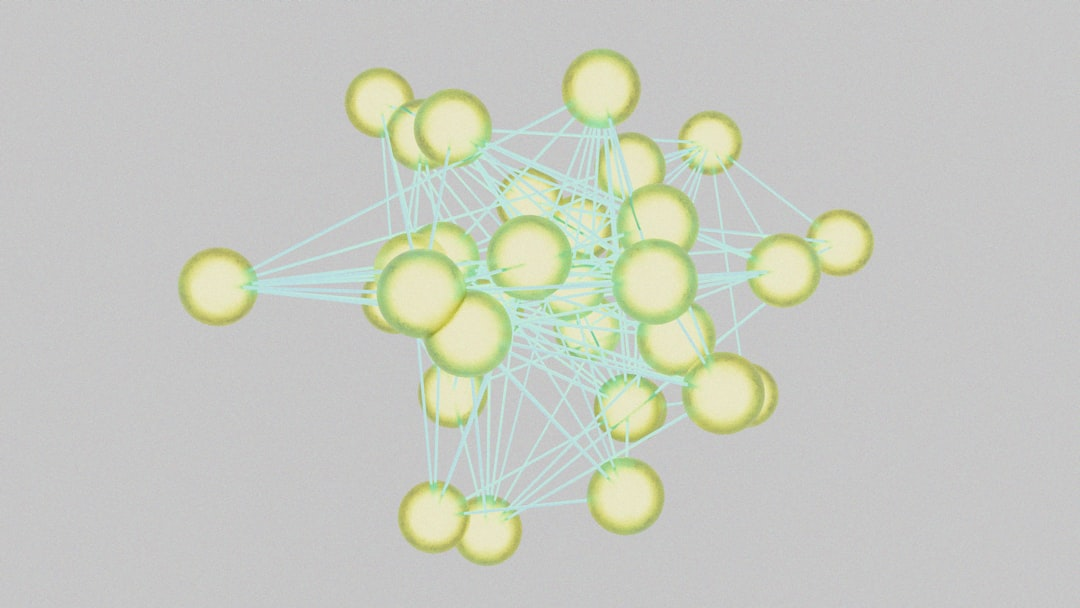
The digital battlefield is more volatile than ever. As cyber adversaries grow more sophisticated, coordinated, and relentless, are your defenses still fighting a solitary war? 🛡️ In an era where AI-driven attacks and polymorphic malware redefine the threat landscape, relying solely on internal security measures is like bringing a knife to a gunfight.
This post will dive deep into the world of Threat Intelligence Sharing, specifically focusing on how the Structured Threat Information eXpression (STIX) and Trusted Automated eXchange of Intelligence Information (TAXII) frameworks are empowering organizations to move from isolated defense to a potent, collective security posture. You’ll learn why these frameworks are indispensable now, how they work together, and how to leverage them for automated, real-time threat data exchange.
The Evolving Threat Landscape: Why Collective Defense Isn’t Optional Anymore
Gone are the days when a perimeter firewall and antivirus were considered sufficient. Today, we face a relentless barrage of threats:
- Nation-state APTs: Sophisticated, well-funded groups like those behind the 2020 SolarWinds attack continue to exploit supply chains and zero-days.
- AI-powered Malware: Attackers are leveraging AI to create highly evasive, polymorphic malware that adapts and learns, bypassing traditional signature-based detection.
- Ransomware-as-a-Service (RaaS): This booming ecosystem lowers the bar for cybercriminals, leading to a surge in attacks impacting critical infrastructure and businesses alike.
- Zero-Day Exploits: The window between discovery and exploitation is shrinking, making proactive intelligence crucial.
The reality is stark: attackers collaborate. They share tools, techniques, and procedures (TTPs) on dark web forums and private channels. Why shouldn’t defenders? 🤝 When one organization experiences an attack, the intelligence derived from that incident—like a new indicator of compromise (IOC) or TTP—could be the very warning another organization needs to prevent a similar breach. This is the essence of collective defense: transforming individual experiences into shared resilience.
Did you know? The 2023 IBM Cost of a Data Breach Report indicates that organizations extensively using AI and automation, including threat intelligence platforms, experienced significantly lower breach costs and shorter breach lifecycles. Sharing intelligence amplifies these benefits across an ecosystem.
STIX: The Universal Language of Cyber Threats
Imagine a world where every security tool, every analyst, and every organization speaks a different language when describing a cyber attack. Chaos, right? That’s where STIX (Structured Threat Information eXpression) comes in. STIX provides a standardized, structured, and machine-readable language for describing cyber threat information. It’s like the Rosetta Stone for threat intelligence. Rosetta Stone
Developed by the OASIS Cyber Threat Intelligence (CTI) Technical Committee, STIX 2.1 is the latest iteration, offering a rich set of predefined objects to represent various aspects of the threat landscape.
Key STIX Objects:
- Indicators: Observable patterns (e.g., IP addresses, domains, file hashes) that may indicate malicious activity.
- Attack Patterns: Descriptions of how adversaries attempt to compromise targets (e.g., spearphishing, SQL injection).
- Malware: Descriptions of malicious software.
- Threat Actors: Information about individuals or groups performing attacks.
- Tools: Descriptions of legitimate software used by adversaries.
- TTPs (Tactics, Techniques, and Procedures): How adversaries operate, often mapped to frameworks like MITRE ATT&CK®.
- Campaigns: Groups of related adversarial activities targeting a common victim set.
By standardizing this information, STIX enables seamless communication between disparate security systems and organizations. It moves us beyond ad-hoc email exchanges and into a world of automated, actionable intelligence.
STIX Advantages: Interoperability across diverse security tools, enhanced automation for threat detection and response, and a common understanding for analysts.
A Glimpse into STIX 2.1 (JSON Format):
1
2
3
4
5
6
7
8
9
10
11
12
13
14
15
16
17
18
19
{
  "type": "indicator",
  "spec_version": "2.1",
  "id": "indicator--a777f985-79e7-49f5-aa45-d4193d56b0c2",
  "created": "2024-02-04T10:00:00.000Z",
  "modified": "2024-02-04T10:00:00.000Z",
  "name": "Malicious Domain Observed in Phishing Campaign",
  "description": "This indicator identifies a domain used in a recent phishing campaign targeting financial institutions.",
  "pattern": "[domain-name:value = 'malicious-phishing-site.xyz']",
  "pattern_type": "stix",
  "valid_from": "2024-02-03T00:00:00.000Z",
  "indicator_types": ["malicious-activity", "phishing"],
  "external_references": [
    {
      "source_name": "Obsqura Threat Lab",
      "url": "https://obsqura.com/threat-report-2024-02-03"
    }
  ]
}
This STIX object clearly defines a malicious domain, its purpose, and even links to an external report. Imagine this intelligence automatically feeding into your firewall or SIEM. ⚡
TAXII: The Delivery Truck for Threat Intelligence
Having a universal language like STIX is powerful, but how do organizations actually exchange this intelligence securely and efficiently? Enter TAXII (Trusted Automated eXchange of Intelligence Information). If STIX is the package containing critical threat information, TAXII is the secure, automated delivery truck that transports it. 🚚
TAXII is an application-layer protocol designed specifically for exchanging CTI. It defines a set of services and message exchanges that enable automated sharing. The latest version, TAXII 2.1, focuses on simplicity and RESTful APIs, making integration much smoother.
How TAXII Works:
- Collections: A TAXII server hosts “Collections” of STIX objects. These are like curated feeds of intelligence.
- Discovery: A TAXII client can “discover” available services and collections on a TAXII server.
- Poll: Clients “poll” collections to request new or updated STIX content.
- Push (Optional): While primarily pull-based, some TAXII implementations support push mechanisms (e.g., through an “Inbox” service) where a producer can send intelligence directly to a consumer.
This pull-based model is crucial for security, as consumers can decide when and from whom to retrieve intelligence, rather than being passively pushed potentially unwanted data.
Critical Security Note: When setting up TAXII servers or clients, always prioritize secure authentication (e.g., client certificates, OAuth 2.0) and encrypted communication (HTTPS). Misconfigured TAXII endpoints can become attack vectors themselves.
Simple TAXII Poll Request (Conceptual Python):
1
2
3
4
5
6
7
8
9
10
11
12
13
14
15
16
17
18
19
20
21
22
23
24
25
26
27
28
29
30
31
32
33
34
35
import requests
import json

# Replace with your TAXII server URL and collection ID
TAXII_SERVER_URL = "https://example.com/taxii2/"
COLLECTION_ID = "945d8b7b-2e92-4f33-8a9d-54b9d5c4119d" # Example Collection ID

# Your authentication details (e.g., API Key, Client Certs, etc.)
headers = {
    "Accept": "application/taxii+json;version=2.1",
    "Authorization": "Basic YXl1c2hqbWE6cGFzc3dvcmQ=" # Base64 encoded 'username:password' (for example)
}

try:
    # Discover API Roots
    discovery_response = requests.get(TAXII_SERVER_URL, headers=headers, verify=True)
    discovery_response.raise_for_status()
    api_roots = discovery_response.json().get('api_roots', [])

    if not api_roots:
        print("No API Roots found.")
        exit()

    # Assuming the first API Root
    api_root_url = api_roots[0] + 'collections/' + COLLECTION_ID + '/objects'

    # Poll the collection for objects
    poll_response = requests.get(api_root_url, headers=headers, verify=True)
    poll_response.raise_for_status()

    stix_objects = poll_response.json()
    print(json.dumps(stix_objects, indent=2))

except requests.exceptions.RequestException as e:
    print(f"Error during TAXII request: {e}")
This snippet demonstrates the basic idea of connecting to a TAXII server and retrieving STIX objects. In a real-world scenario, you’d integrate this with a Threat Intelligence Platform (TIP) or a custom script that processes the received intelligence.
Building a Collective Defense Strategy: Integrating STIX/TAXII
Adopting STIX and TAXII isn’t just about using new tools; it’s about embracing a paradigm shift towards proactive, collaborative defense. Here’s how organizations can build a robust collective defense strategy:
- Identify Trust Communities & Partners: Start by joining or forming an Information Sharing and Analysis Center (ISAC/ISAO) or a trusted peer group within your industry. Sharing works best when there’s mutual trust and common interests.
- Implement STIX-Compliant Tools: Leverage Threat Intelligence Platforms (TIPs), Security Information and Event Management (SIEM) systems, and Security Orchestration, Automation, and Response (SOAR) platforms that natively support STIX 2.1 ingestion and export. This is foundational for automation.
- Configure TAXII Clients/Servers: Set up TAXII clients within your environment to regularly poll relevant intelligence feeds. If you’re a threat intelligence producer, consider setting up a TAXII server to share your own anonymized or generalized intelligence with trusted partners.
- Integrate Intelligence into Defense Systems: The real power comes from action. Automatically feed ingested STIX indicators into your firewalls, Intrusion Detection/Prevention Systems (IDS/IPS), Endpoint Detection and Response (EDR) solutions, and Security Gateways. For TTPs, use them to refine your SIEM correlation rules or EDR detection logic.
- Establish Governance and Trust Frameworks: Develop clear policies on what intelligence to share, how it’s anonymized, and who has access. Legal and privacy considerations (e.g., GDPR, CCPA) must be carefully addressed, especially when sharing across borders.
- Automate Response Workflows: Use SOAR playbooks to automatically triage alerts, block malicious IPs, or quarantine infected systems based on ingested STIX intelligence. This significantly reduces response times from hours to minutes or even seconds.
The Cost of Isolation: In a 2024 CISA report, it was highlighted that organizations not participating in threat intelligence sharing initiatives are statistically more likely to experience longer dwell times for breaches and higher recovery costs due to a lack of early warning. Don’t be an island in a stormy cyber sea.
Real-World Impact and the Future of Collective Defense
The impact of collective defense powered by STIX/TAXII is tangible:
- Financial Services ISAC (FS-ISAC): A prime example where hundreds of financial institutions share threat intelligence, leading to proactive blocking of fraudulent activity and faster response to new attack campaigns.
- CISA’s Role: The Cybersecurity and Infrastructure Security Agency (CISA) actively uses and promotes STIX/TAXII for sharing critical infrastructure threat intelligence across sectors, acting as a central hub for vital warnings.
- Reduced Dwell Time: By receiving IOCs and TTPs in real-time, organizations can detect and remediate threats much faster, often before they cause significant damage.
The future of collective cyber defense with STIX/TAXII is bright and rapidly evolving:
- AI/ML Enhanced Intelligence: Threat intelligence platforms are increasingly using AI and machine learning to analyze massive datasets of STIX intelligence, identify emerging patterns, and even predict future attack vectors.
- Deeper SOAR Integration: The seamless orchestration of threat intelligence directly into automated response playbooks will become the norm, creating truly adaptive defense systems.
- Sovereign Sharing Initiatives: Nations are building their own STIX/TAXII hubs to share intelligence across government agencies and critical national infrastructure.
- Threat Hunting Automation: STIX data will increasingly drive automated threat hunting queries, allowing organizations to proactively search for signs of compromise based on the latest adversary activity.
The Network Effect: Just as in social networks, the value of threat intelligence sharing grows exponentially with the number of participants. The more organizations that share, the richer and more comprehensive the collective intelligence becomes.
Key Takeaways
- Necessity, Not Luxury: In today’s threat landscape, collective cyber defense via intelligence sharing is no longer optional; it’s a strategic imperative.
- STIX is the Language: STIX provides the standardized, machine-readable format for describing cyber threats, enabling interoperability.
- TAXII is the Protocol: TAXII is the secure, automated mechanism for exchanging STIX-formatted threat intelligence.
- Automation is Key: Leveraging STIX/TAXII automates the ingestion and distribution of threat intelligence, vastly improving detection and response times.
- Proactive Defense: Collective defense moves organizations from reactive incident response to proactive threat mitigation, significantly reducing risk.
Conclusion
The solitary defender is an endangered species. To truly stand a chance against the evolving and collaborative adversary, organizations must unite. STIX and TAXII are not just frameworks; they are the backbone of this unified defense strategy, enabling automated, real-time intelligence exchange that can literally make the difference between a minor incident and a catastrophic breach. Embrace these powerful tools, join the collective, and fortify your digital borders with the wisdom of the crowd. 🚀
—Mr. Xploit 🛡️