The Silent Collision: Mastering V2X Security in the Age of Connected Cars
Discover how V2X technology is reshaping transportation and why securing vehicle-to-everything communications is the most critical challenge for automotive engineers.
Introduction
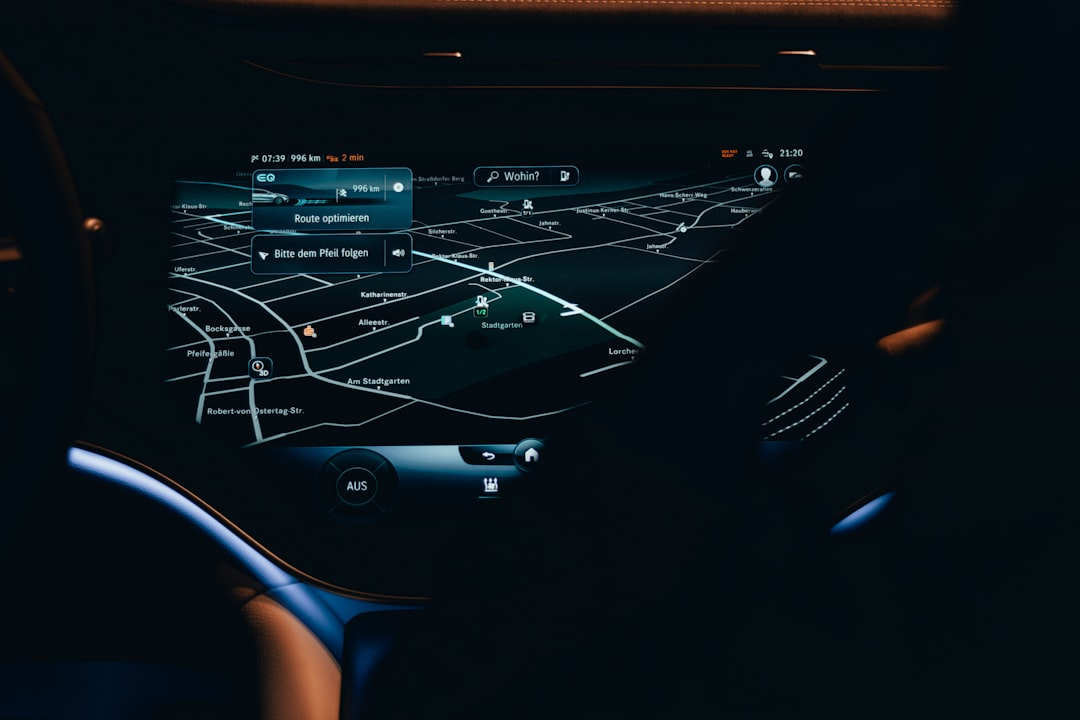
Imagine you are driving down a highway, but you aren’t alone—your car is constantly “chatting” with traffic lights, road signs, and the vehicles around you. This is the promise of V2X (Vehicle-to-Everything) technology. It’s the invisible glue holding the future of autonomous driving together, designed to reduce accidents and optimize traffic flow. ⚡
However, with every byte of data transmitted, a new door opens for malicious actors. As vehicles transition into high-speed data centers on wheels, the attack surface has expanded beyond the cabin. In this post, we will dive deep into the architecture of V2X security, the cryptographic challenges we face, and how the automotive industry is hardening these communication channels against a looming wave of cyber threats.
The Anatomy of V2X Communications
V2X is not a single technology; it is an ecosystem that encompasses V2V (Vehicle-to-Vehicle), V2I (Vehicle-to-Infrastructure), and V2P (Vehicle-to-Pedestrian). By 2026, the global V2X market is projected to reach unprecedented growth levels as 5G-enabled edge computing becomes the standard for smart city infrastructure.
At its core, V2X allows cars to broadcast “Basic Safety Messages” (BSM) ten times per second. These messages contain velocity, heading, and braking status. If these messages are intercepted or spoofed, the impact could be catastrophic.
The IEEE 802.11p standard was the traditional foundation for V2X, but the industry is rapidly shifting toward C-V2X (Cellular V2X), leveraging 5G and PC5 interfaces for lower latency and higher reliability.
The Security Paradox: Availability vs. Integrity
In traditional IT security, the “CIA Triad” (Confidentiality, Integrity, Availability) is king. In automotive, Availability often takes precedence because a delayed safety message could lead to a physical crash. ⚠️
However, securing these communications creates a paradox: how do you verify the identity of every vehicle without sacrificing the millisecond-latency required for collision avoidance?
The PKI Challenge
The industry standard for V2X security relies on a Public Key Infrastructure (PKI). Vehicles are issued digital certificates that allow them to sign their messages. When a vehicle receives a signal, it verifies the digital signature against a Certificate Revocation List (CRL).
1
2
3
4
5
6
7
# Example logic for V2X message verification
if (signature_valid(msg) && !in_revocation_list(certificate_id)) {
    process_traffic_data();
} else {
    discard_packet();
    log_security_event(ALERT_UNAUTHENTICATED_SOURCE);
}
The “size” of the CRL is a major bottleneck. As millions of vehicles join the road, checking a massive database of revoked certificates in under 10 milliseconds is a massive engineering hurdle.
Threat Landscapes: Spoofing and Sybil Attacks
Cybersecurity researchers have identified several critical vectors that threaten the integrity of V2X networks. Among them, the Sybil Attack remains one of the most dangerous.
Understanding the Attacks
- Sybil Attack: A single malicious vehicle broadcasts multiple fake identities, tricking other cars into believing there is a massive traffic jam ahead, forcing them to reroute into a physical trap.
- Message Spoofing: An attacker broadcasts a false “Emergency Brake” signal to cars behind them, causing a phantom traffic jam or a pile-up.
- Denial of Service (DoS): Flooding the V2X frequency (5.9 GHz) with noise to render the safety systems of modern vehicles “blind.”
| Threat Type | Potential Impact | Mitigation Strategy |
|---|---|---|
| Spoofing | False safety alerts | PKI Signature Verification |
| Sybil | Traffic manipulation | Multi-modal sensor fusion (Radar/LiDAR) |
| DoS | Blind spot creation | Frequency hopping & 5G network slicing |
Hardening the Future: Multi-Layered Defense
To truly protect the vehicle, we cannot rely on encryption alone. We must adopt a Defense-in-Depth strategy. This involves cross-verifying V2X data with internal vehicle sensors.
“If a V2X message tells the car that a truck is suddenly braking, but the onboard LiDAR sensors show a clear road, the vehicle’s central gateway must prioritize the physical sensor input over the digital broadcast.” — Automotive Cybersecurity Best Practices
Practical Steps for Implementation
- Hardware Security Modules (HSM): Ensure that private keys are stored in tamper-proof hardware, not in the vehicle’s general-purpose CPU.
- Zero-Trust Networking: Every electronic control unit (ECU) within the vehicle should treat the V2X gateway as an untrusted source.
- Behavioral Analytics: Implement AI-driven detection systems that flag vehicles showing erratic movement patterns or frequent identity changes.
Explore the NIST Cybersecurity Framework for adapting enterprise-grade risk management to automotive embedded systems.
Key Takeaways
Securing our roads in the digital age requires a shift in how we view the vehicle. Here is how to keep your ecosystem safe:
- Trust Nothing: V2X messages must always be treated as advisory; physical sensor validation (LiDAR/Radar) is mandatory for safety-critical decisions.
- PKI Management is Critical: Invest in robust Certificate Management Systems (CMS) that can handle real-time revocation without latency spikes.
- Hardware Security First: Never store cryptographic secrets in software; ensure HSMs are integrated at the silicon level.
- Continuous Monitoring: Use OTA (Over-the-Air) updates to patch vulnerabilities as soon as they are identified by the security community.
Conclusion
The evolution of V2X is a race between innovation and exploitation. While the risks of connected vehicles are tangible, the potential for saving lives through coordinated driving is unmatched. As we build the infrastructure of tomorrow, we must bake security into the architecture—not as an afterthought, but as the foundation. 🚀
Are your systems ready for the connected road? Stay vigilant, keep your firmware updated, and always question the source of the signal.
—Mr. Xploit 🛡️