Cyber Sanity Checks: Are Your Security Controls Actually Working?
Stop assuming your defenses hold. Learn how to perform cyber sanity checks to validate controls, identify gaps, and stay ahead of evolving threats in 2026.
Introduction
Imagine locking your front door, turning the deadbolt, and walking away with the absolute certainty that your home is secure. Now imagine coming back to find the door wide open because the strike plate was never actually screwed into the frame. In the world of enterprise cybersecurity, this is exactly what happens when teams rely on “set it and forget it” security controls. 🔐
The modern threat landscape is moving at a breakneck pace. According to recent 2026 industry reports, over 60% of security breaches occur not because a tool failed, but because it was misconfigured or bypassed due to an oversight in environmental context. It is no longer enough to deploy a Firewall, EDR, or SIEM; you must prove they are working. This post will guide you through the process of performing “Cyber Sanity Checks”—a systematic approach to validating your security assumptions before an attacker does it for you.
The Illusion of Coverage: Why Assumptions Kill
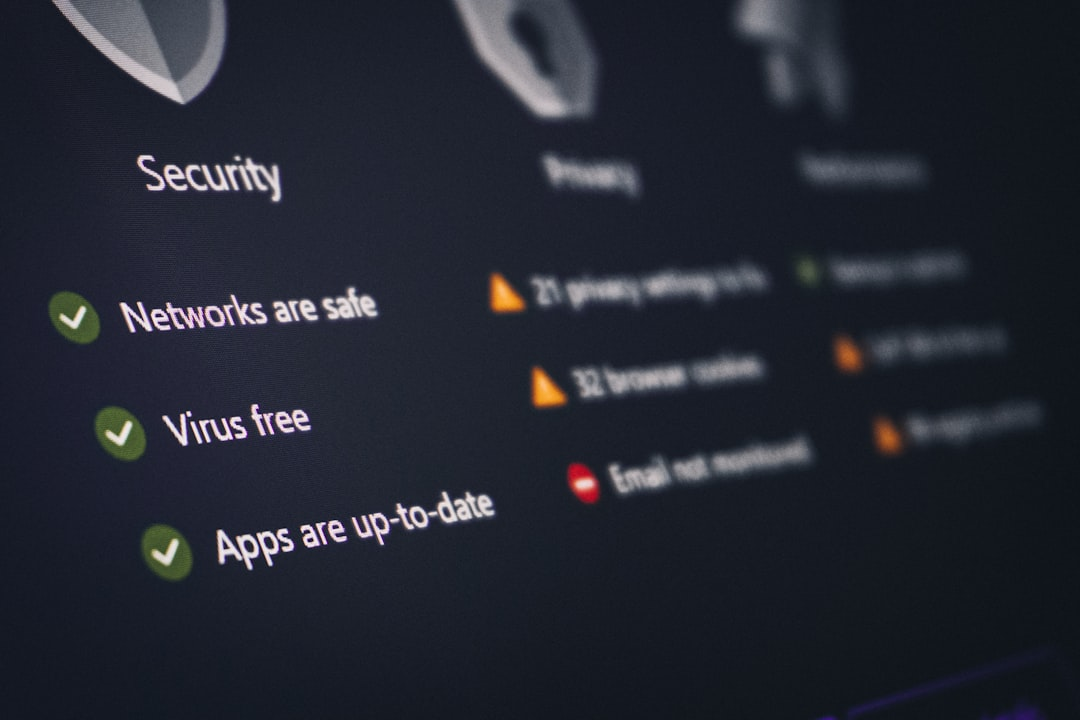
Many organizations operate under the “Assumption of Coverage.” You see a green light on your management console and assume that because the policy is pushed, the protection is active. However, the reality often looks different. Network architectural changes, shadow IT, and legacy configurations often create “blind spots” where your expensive security stack is essentially firing blanks. ⚠️
“Security is not a state of being; it is a continuous process of verification. If you aren’t testing your controls, you aren’t managing them—you’re hoping they work.”
Critical Security Warning: The most dangerous gap is the one you don’t know exists. A “dark” sensor or an unmonitored egress point is an open invitation for an adversary to establish persistence within your perimeter.
Defining the Sanity Check Framework
A Cyber Sanity Check isn’t a full-blown Red Team engagement; it is a rapid, repeatable validation exercise. Think of it as a smoke test for your security architecture. You are checking for the “lowest common denominator” failures. ⚡
1. The Egress Validation Test
Most organizations focus heavily on ingress filtering (blocking bad stuff coming in). However, attackers thrive on the lack of egress filtering. Can your compromised server reach out to a Command & Control (C2) server?
- Test: Use a simple curl or PowerShell request to a known test domain.
- Metric: If your internal server can reach a non-reputable IP on port 443 without triggering an alert, your Egress filtering is a suggestion, not a policy.
1
2
# Quick sanity check for egress connectivity
curl -I https://test-c2-domain.com
2. Log Integrity Audit
Are your logs actually reaching the SIEM? Often, a storage partition fills up or a log shipper crashes, and the security team remains oblivious.
Pro-Tip: Check the _internal logs of your SIEM regularly. If you aren’t seeing heartbeat signals from your critical assets, assume those assets are blind.
Comparing Controls: The Validation Matrix
Not all controls offer the same level of assurance. Use this table to categorize your validation efforts based on the NIST Cybersecurity Framework functions.
| Control Type | Sanity Check Frequency | Validation Method | Complexity |
|---|---|---|---|
| Endpoint (EDR) | Daily | Trigger a non-malicious EICAR file | Low |
| Network (WAF) | Weekly | Run common SQLi payloads | Medium |
| Identity (MFA) | Monthly | Attempt bypass via session hijacking simulation | High |
| Cloud (IAM) | Quarterly | Review unused permissions (Right-sizing) | Medium |
The Art of “Negative Testing”
Negative testing is the practice of confirming that a system fails when it is supposed to. If you are testing a new firewall rule, you must verify that traffic is actually blocked. Too many engineers test only the “happy path” (that legitimate traffic passes).
The 3-Step Validation Process:
- Baseline: Document what the system does under normal operation.
- Hypothesis: If I block port 22, the connection will drop.
- Verification: Execute the block and confirm the timeout/reset packet is captured in the logs.
Automate these checks using Infrastructure as Code (IaC) principles. If you can trigger a sanity check via a CI/CD pipeline, you ensure that your security posture is validated every time you deploy a configuration change.
Bridging the Gap: Bridging People and Tech
Technology is only half the battle. Your sanity checks should also encompass the “Human Factor.” Are your security alerts reaching the right people?
In many organizations, alerts are generated but never read. Conduct a “Mock Incident” where you trigger a low-level alert and measure:
- Time to detection (TTD).
- Time to acknowledgment (TTA).
- The effectiveness of your internal communication channels (e.g., Slack, PagerDuty, Email).
If the alert hits an inbox that nobody monitors, your advanced AI-driven detection stack is effectively useless. 📊
Key Takeaways
Validating your assumptions is the hallmark of a mature security program. Here is your action plan:
- Stop Assuming, Start Verifying: Move away from dashboard-based comfort and conduct regular, hands-on validation of your security controls.
- Prioritize Egress Monitoring: Ensure that your network controls are actually preventing unauthorized data exfiltration, not just ingress attacks.
- Automate the Basics: Use scripts or automated Breach and Attack Simulation (BAS) tools to run daily smoke tests on your security sensors.
- Test the Human Loop: A technical alert is useless if the process to respond to it is broken. Ensure your SOC team is part of the validation loop.
Conclusion
The cybersecurity landscape of 2026 demands more than just expensive tools—it demands accountability. By performing regular “Cyber Sanity Checks,” you peel back the layers of false confidence and uncover the reality of your security posture. It is better to find a gap during a test today than to discover it during a breach tomorrow.
Take a moment this week to pick one security assumption you hold and prove it wrong (or right). You might be surprised at what you find. 🚀
Stay vigilant and keep testing,
—Mr. Xploit 🛡️